2026 Master Bedroom Closet Ideas: A Broward County Guide To Layouts, Materials, And Humidity-Smart Design
By Perry BirmanFounder, American Built-In Closets · Custom Closet Designer, Storage Solutions Specialist & Space Optimization Expert|Originally published: March 2026 | Updated: August 2026
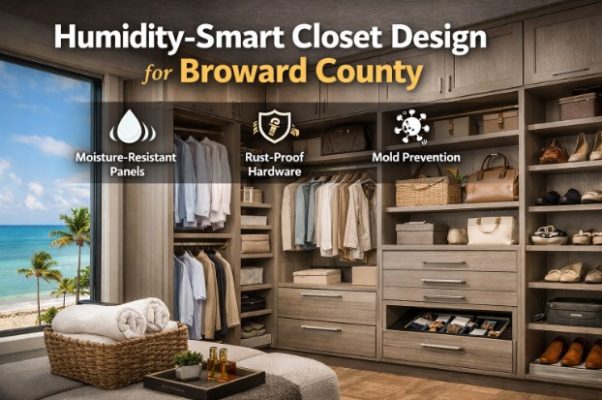
Broward County master bedroom closet ideas for 2026 should prioritize humidity-resistant panels, sealed edges, and corrosion-resistant hardware because coastal air and high humidity can warp panels and corrode components within two years.
Broward County humidity routinely reaches the low to mid-70 % range in the summer months, so moisture-resistant panels like TFL, HPL, and thermofoil serve as performance materials, not cosmetic upgrades.
Custom master bedroom closets in Broward County typically run from basic reach-in upgrades to premium walk-in builds, with final pricing driven by layout complexity, drawer count, lighting, and material tier.
South Florida salt air accelerates corrosion on builder-grade hardware, so Grade 304 stainless steel or Grade 316 stainless steel should anchor the hardware specification for closet rods, brackets, and high-touch components in coastal homes.
Broward condo projects commonly require HOA modification approvals and insurance documentation, so project planning should start before fabrication and installation scheduling.
High-value 2026 upgrades for Broward County closets include ventilated shoe storage, damp-rated LED lighting, and odor-control drawer systems, which reduce moisture retention and improve daily usability.
Start with a climate-ready layout plan from a local team that installs across Broward County, so the design matches humidity exposure, home type, and daily wardrobe needs. Schedule a consultation today.
If you’re ready to get
started, call us now!
Reach-In vs Walk-In vs Hybrid Wardrobe Wall: Which Fits A Broward Home
A Broward County closet layout should match square footage and building type because reach depth, wall construction, and airflow patterns change across older single-family homes and high-rise condos.
A configuration decision also affects moisture risk because enclosed storage and exterior-wall contact increase exposure to condensation in humid months.
Configuration
Minimum Space
Best Broward Home Type
Key Strengths
Humidity Consideration
Reach-In
4–6 ft wide
Older Hollywood, Dania Beach, Pompano Beach
Double-hang increases capacity, the lowest cost entry
Ventilated drawers reduce moisture trapping
Walk-In
50–100+ sq ft
Coral Springs, Plantation, Weston, Parkland
Maximum storage, U-shaped and island options
Dehumidifier planning improves performance
Hybrid Wardrobe Wall
8–12 ft wall span
Fort Lauderdale condos, Pembroke Pines townhomes
Floor-to-ceiling capacity without a dedicated room
Sealed backs protect exterior-wall installations
A configuration choice becomes simpler when homeowners compare function and footprint side by side, and a detailed overview of walk-in vs reach-in closets helps align the layout to Broward housing stock.
What To Measure And Photograph Before A Broward Closet Consultation
A measurement-ready homeowner reduces revision cycles because accurate measurements and clear photos allow the first quote and first 3D design to reflect real site conditions. Broward County older homes often include non-parallel walls and soffits, so multi-point measuring prevents false assumptions.
Measurements to capture
Closet width at floor level measured in three spots
Closet depth from front to back
Ceiling height inside the closet and at the door opening
Door opening width plus swing clearance, or sliding track width
Distance from closet opening to bedroom furniture obstruction
Height and location of soffits, pipes, or HVAC ducts
Location and height of outlets and light boxes
Photos to capture
All four walls from corner to corner
Ceiling showing vents, soffits, and beams
Current anchors for rods and shelves
Rust staining, mildew marks, panel swelling
Exterior wall confirmation if the closet shares an exterior-facing wall
Master bathroom finish reference for coordinated metal selection
A homeowner planning worksheet improves consultation outcomes, and the planning framework in custom closet design planning helps translate measurements into zone requirements.
2026 Design Trends That Work In Broward County’s Climate
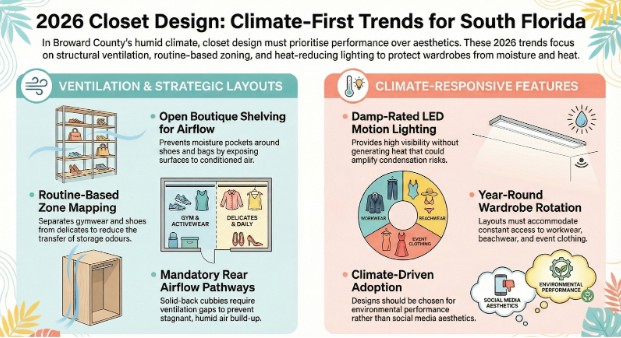
A Broward County closet trend should earn adoption through climate performance, not social media aesthetics. Open display storage improves airflow, routine-based zones reduce overpacking, and damp-rated LED lighting reduces heat load in already-warm closet spaces.
Boutique Open-Shelf Display That Promotes Airflow
Open shelving prevents moisture pockets around shoes and bags by exposing surfaces to conditioned air. Ventilation gaps matter most behind cubbies, so solid-back cubbies should include airflow pathways in humid bedrooms.
Routine-Based Zone Layouts Built For Year-Round Wardrobes
South Florida wardrobes rarely follow a true off-season, so zone sizing should reflect ongoing rotation among workwear, beachwear, gymwear, and event clothing.
A zone layout also reduces the transfer of mixed-storage odors because shoes and athletic items stay separated from delicates. A zone-first method from the master bedroom closet organization improves daily flow.
Cool-Temperature LED Motion Lighting Rated For Humidity
Damp-rated LED lighting improves visibility without generating significant heat, so it does not increase the risk of condensation in high humidity.
A Broward County layout should match the building type because condo exterior walls, older shallow closets, and newer primary suite footprints create different constraints. A generic template often wastes space or ignores the risk of moisture.
Walk-In Layouts For Plantation, Coral Springs, And Weston
U-shaped walk-ins maximize storage per square foot because three walls carry hanging, shelving, and drawers. Island walk-ins require clear maneuvering space because islands reduce airflow when aisles become tight.
Reach-In And Wardrobe Wall Upgrades For Older Broward Homes
Older reach-ins often include one rod and one shelf, so double-hang systems add immediate capacity without changing the footprint.
A reach-in upgrade also benefits from zone-driven drawers at waist height, and a local pattern guide, such as reach-in closet layouts, helps standardize heights and spacing.
Condo Closet Solutions For Fort Lauderdale And Hollywood High-Rises
Condos add constraints around exterior-wall moisture exposure, freight scheduling, and HOA approval timelines.
Wall-track modular panel systems work well in Fort Lauderdale and Hollywood high-rise closets because wall-track mounting reduces the risk of structural modification during HOA review.
Humidity-Resistant Materials That Last In South Florida
Material selection drives durability in Broward County because high humidity and salt exposure punish unsealed edges, weak cores, and low-grade coatings.
A materials-first specification reduces replacement risk because replacement costs typically exceed the incremental cost of higher-grade panels and hardware.
Panel Materials. What Each Material Is And Where Each Material Belongs
TFL is a thermally fused laminate panel that performs well for shelves and interior panels when PVC edge banding seals all cuts.
HPL is a high-pressure laminate surface that performs best on high-touch faces and work surfaces because HPL resists abrasion and moisture penetration.
Thermofoil is a vinyl-wrapped face that fits doors and drawer fronts because the wrap reduces the number of exposed edge entry points.
Melamine is a resin-impregnated surface that works for budget shelving when full edge banding protects the core.
Marine-grade plywood is a void-free core panel that suits vanity bases and island carcasses in higher moisture zones.
Edge Banding And Hole Sealing That Prevents Early Failure
Edge banding protects the core because cut edges absorb moisture faster than finished faces.
A Broward-ready specification should require thick PVC edge banding on all cut edges and sealing of shelf-pin and hardware holes immediately after drilling.
Hardware Specification That Survives Salt Air
Hardware-based metal matters more than hardware appearance in coastal homes. The U.S. Environmental Protection Agency recommends keeping indoor humidity below 60%, and ideally between 30% and 50%, to reduce mold risk, so closet hardware needs to be corrosion-resistant when humidity rises. (EPA mold and moisture guidance)
Grade 316 stainless steel improves chloride corrosion resistance compared with Grade 304 stainless steel, so Grade 316 hardware performs better in coastal environments with salt exposure.
Features Worth Adding In 2026 And Features Worth Skipping In Broward County
A feature decision should use a Broward climate lens because carpet, chrome-plated steel, and sealed lower cabinets often trap moisture or corrode quickly in South Florida.
Feature
Recommendation
Broward County Reason
Ventilated shoe storage
Yes
Airflow protects leather and reduces odor buildup
Damp-rated LED motion lighting
Yes
Low heat, humidity tolerance, better visibility
Cedar-lined drawers
Yes
Odor control and moisture buffering with periodic reactivation
Carpet closet flooring
Skip
Moisture trapping increases mildew risk
Chrome-plated steel hardware
Skip
Corrosion accelerates near coastal air pathways
Solid-back lower cabinets
Conditional
Requires an airflow pathway or active dehumidification
A closet system spec becomes easier when the feature list aligns with space constraints and intended use, and the examples within closet customization options help homeowners choose upgrades that improve daily flow.
What Master Bedroom Closets Cost In Broward County. 2026 Pricing
Broward closet pricing shifts with material tier, hardware tier, lighting scope, and installation complexity.
Broward homeowners can anchor planning with the cost drivers in the Broward custom closet cost, then adjust for condo logistics and premium finish allocations.
Closet Type
Typical 2026 Range
Key Cost Drivers
Reach-in basic upgrade
$1,200–$3,000
Double-hang, drawers, hardware replacement
Walk-in standard
$3,500–$8,000
Square footage, layout complexity, TFL build
Walk-in premium
$8,000–$15,000+
Island, HPL faces, LED system, 316 hardware
Condo wardrobe wall
$2,500–$6,000
Modular system, HOA logistics, exterior-wall sealing
Use the cost tiers and material tiers from the Broward closet cost guide to set a realistic budget, then request a design that allocates HPL and 316-grade hardware only where performance needs justify the upgrade.
Ventilation And Maintenance. Keeping A Broward Closet Fresh Year-Round
A humidity-resistant closet still needs moisture management because Broward County humidity stays elevated for long stretches of the year.
Keep closet doors open when practical, so the closet shares conditioned bedroom air.
Confirm HVAC supply airflow reaches the closet volume
Maintain a door undercut that supports passive air exchange
Use a dehumidifier in walk-ins when the interior air stagnates
Monthly Maintenance Protocol
Wipe laminate shelves and rods with a mild cleaner, then dry the seams immediately.y
Check for musty odor as an early moisture signal
Inspect edge banding and reseal chips quickly
Vacuum corners to reduce dust that holds moisture
A printable care routine helps maintain performance, and the structured checklist inside closet maintenance provides an implementation reference.
Broward Closet Remodel Plan. Inventory To Install
A Broward County closet remodel performs best when planning starts with inventory and constraint mapping. A seven-step path keeps decisions tied to real wardrobe needs and building rules.
Wardrobe inventory by category and garment length
Consultation and measurement with exterior-wall risk identification
3D design review with zone validation
Material specification and fabrication
HOA submission for condos when required
Professional installation with wall-type-specific anchoring
Final walkthrough with hardware, lighting, and edge checks
Installation preparation reduces delays and protects surfaces, and the checklist in installation preparation supports a smoother install day.
Contact Us Today For An Appointment
Frequently Asked Questions
What closet materials hold up best in Broward County’s humidity?
HPL and TFL panels with 2 mm PVC edge banding perform well in Broward County because laminate faces resist moisture entry and wipe clean easily. Thermofoil works well on drawer fronts and doors. Use the materials guidance inthe best closet materials to match surfaces to closet zones.
Do I need HOA approval for a closet remodel in a Broward County condo?
Many Broward County condo associations require that a modification request be submitted before installation, along with a contractor’s insurance certificate and an installation plan showing anchor points and weight distribution. Condo-specific constraints and moisture risks appear inFort Lauderdale condo closet planning.
How do I prevent mold in a South Florida master bedroom closet?
South Florida closets reduce mold risk by controlling humidity and improving airflow. The U.S. Environmental Protection Agency recommends keeping indoor humidity below 60%, so a walk-in closet often benefits from a dehumidifier and a hygrometer. Use a monthly routine from thecloset maintenance checklist.
What is the difference between a reach-in, walk-in, and wardrobe wall in Broward County?
A reach-in upgrade increases capacity with double-hang rods and drawers in shallow closets. A walk-in closet maximizes storage with U-shaped or island layouts. A wardrobe wall adds floor-to-ceiling storage without a separate closet room. Compare use cases withwalk-in vs reach-in guidance.
How far in advance should I plan a Broward County condo closet project?
Broward condo closet projects should start weeks ahead because HOA review, fabrication, and elevator scheduling add lead time. A practical sequence starts with measurements, then HOA submission, then fabrication, then installation prep. Use theinstallation preparation checklist to avoid day-of delays.
Schedule a design consult through Custom Closet Systems in Fort Lauderdale so the project aligns with HOA timing, fabrication lead time, and installation logistics with a Broward-ready specification.
Founder, American Built-In Closets · Custom Closet Designer · Storage Solutions Specialist · Space Optimization Expert
Perry Birman is the founder of American Built-In Closets, a South Florida custom closet and storage company he established in 1996. With nearly three decades of experience in custom storage design, furniture manufacturing, and residential space optimization, Perry has helped homeowners throughout Miami-Dade, Broward, and Palm Beach counties create functional, customized organization systems tailored to their homes and lifestyles.
Drawing on a hands-on background in furniture manufacturing and production, Perry has extensive expertise in materials selection, fabrication processes, structural design, cabinetry construction, and custom-built storage systems. He has overseen the design, manufacturing, and installation of thousands of custom closets, garage storage systems, home offices, pantries, wall units, and built-in organization solutions throughout South Florida.
As founder of American Built-In Closets, Perry oversees design standards, manufacturing operations, product quality, and project development. His work focuses on maximizing usable space while maintaining durability, craftsmanship, functionality, and long-term value for homeowners.
Perry regularly shares insights on custom closet design, home organization, space optimization, built-in storage solutions, cabinetry construction, and residential storage trends based on nearly 30 years of real-world experience serving South Florida homeowners.
Credentials Snapshot
Founder, American Built-In Closets (1996–Present)
Nearly 30 Years of Custom Storage & Closet Design Experience
Expertise in Furniture Manufacturing & Cabinet Construction
Specialization: Custom Closets, Garage Storage, Home Offices, Pantries & Built-In Organization Systems
Service Area: Miami-Dade, Broward & Palm Beach Counties, Florida