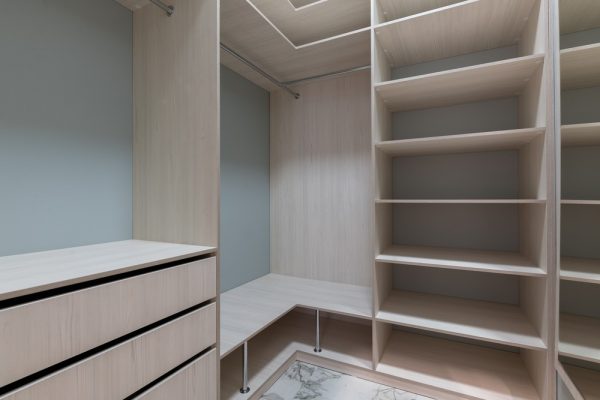
Custom Closet Engineering: Planning High-Performance Systems
By Perry BirmanFounder, American Built-In Closets · Custom Closet Designer, Storage Solutions Specialist & Space Optimization Expert|Originally published: February 2023 | Updated: April 2026
What are the key specifications for a high-performance custom closet? A high-performance closet system is defined by a 32mm modular hole pattern, 3/4-inch furniture-grade Melamine or MDF panels, and full-extension ball-bearing drawer slides. For residential projects in South Florida, these systems must be engineered with a moisture-resistant seal to withstand humidity levels above 60%. Implementing a zoned layout based on “reach-frequency” can improve daily retrieval efficiency by an estimated 25%.
Step 1: Precision Measurement Standards
Closet measurement requires tolerances within 1/16th of an inch to ensure structural integrity and seamless installation.
Laser Distance Estimation: Use a laser level to identify “out-of-plumb” walls, common in South Florida masonry construction.
Obstacle Mapping: Document the location of HVAC vents, electrical junction boxes, and baseboard molding heights to prevent hardware interference.
Swing-Clearance Analysis: Ensure a minimum of 36 inches of clearance for walk-in aisles and a 90-degree door swing for reach-in cabinetry.
Step 2: Technical Material and Finish Selection
Material selection directly impacts the Janka Hardness and moisture-wicking properties of the storage system.
Industrial Melamine: This resin-coated composite provides a scratch-resistant surface (meeting TSCA Title VI standards) that is superior to painted wood for high-friction areas.
Concealed Hardware: Utilize European-style hinges and soft-close dampers to reduce mechanical noise and extend the lifespan of drawer faces.
Integrated Illumination: Install LED tape lighting (CCT 3000K-4000K) with a minimum of 500 lumens per foot for optimal color rendering of clothing.
If you’re ready to get
started, call us now!
Step 3: Zoned Layout and Ergonomic Architecture
Functional zoning prioritizes items based on the “Golden Zone” (the area between the knees and shoulders).
Primary Zone (Eye Level): Place daily-wear items and high-frequency footwear within a 30-to-60-inch height range.
Vertical Stacking: Use floor-to-ceiling shelving to utilize the top 20% of the closet for “dead storage” (seasonal items and luggage).
Linear Hanging Optimization: Install double-tiered chrome rods to maximize vertical capacity for shirts and trousers, effectively doubling the usable hanging inches.
Step 4: Professional Design vs. DIY Modular Systems
While DIY kits offer initial cost savings, a professionally designed system by a specialist like American Built-In Closets ensures structural safety and higher resale value.
Custom Millwork: Professional installers use undermount drawer glides and cam-lock fasteners that provide 50% more weight capacity than standard wire shelving.
South Florida Regional Compliance:American Built-In Closets designs storage solutions specifically for Palm Beach, Broward, and Miami-Dade homes, accounting for local architectural quirks and humidity requirements.
Final Technical Audit
A high-performance closet is a mechanical asset. By using American Built-In Closets, homeowners transition from passive storage to an engineered system that increases home equity and daily operational efficiency.
Founder, American Built-In Closets · Custom Closet Designer · Storage Solutions Specialist · Space Optimization Expert
Perry Birman is the founder of American Built-In Closets, a South Florida custom closet and storage company he established in 1996. With nearly three decades of experience in custom storage design, furniture manufacturing, and residential space optimization, Perry has helped homeowners throughout Miami-Dade, Broward, and Palm Beach counties create functional, customized organization systems tailored to their homes and lifestyles.
Drawing on a hands-on background in furniture manufacturing and production, Perry has extensive expertise in materials selection, fabrication processes, structural design, cabinetry construction, and custom-built storage systems. He has overseen the design, manufacturing, and installation of thousands of custom closets, garage storage systems, home offices, pantries, wall units, and built-in organization solutions throughout South Florida.
As founder of American Built-In Closets, Perry oversees design standards, manufacturing operations, product quality, and project development. His work focuses on maximizing usable space while maintaining durability, craftsmanship, functionality, and long-term value for homeowners.
Perry regularly shares insights on custom closet design, home organization, space optimization, built-in storage solutions, cabinetry construction, and residential storage trends based on nearly 30 years of real-world experience serving South Florida homeowners.
Credentials Snapshot
Founder, American Built-In Closets (1996–Present)
Nearly 30 Years of Custom Storage & Closet Design Experience
Expertise in Furniture Manufacturing & Cabinet Construction
Specialization: Custom Closets, Garage Storage, Home Offices, Pantries & Built-In Organization Systems
Service Area: Miami-Dade, Broward & Palm Beach Counties, Florida