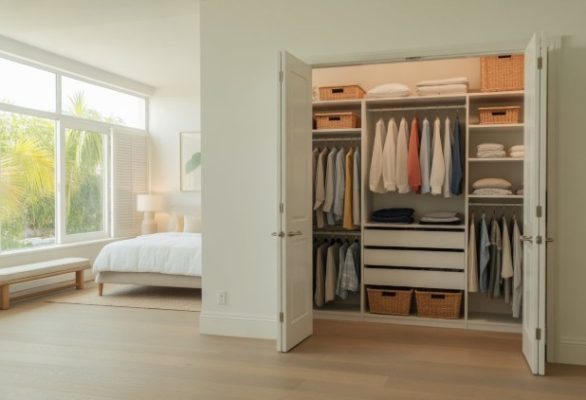
Walk-In Closet, Reach-In Closet, or Wardrobe System: Choosing the Right Storage Solution for South Florida Bedrooms
By Perry BirmanFounder, American Built-In Closets · Custom Closet Designer, Storage Solutions Specialist & Space Optimization Expert|Originally published: December 2025 | Updated: March 2026
Your bedroom closet does more than just hold clothes. It shapes how your mornings start and how organized your daily life feels.
The best storage option for a South Florida bedroom depends on your space, budget, and how much clothing you need to store, with walk-in closets offering luxury and room, reach-in closets maximizing small spaces, and wardrobe systems providing flexible solutions for unique layouts.
Each property brings its own bedroom dimensions and layout quirks. The right closet design should consider local factors like humidity, seasonal clothing, and how much square footage you actually have.
Understanding the strengths of each storage type helps you pick what fits your specific situation. That way, getting dressed feels easier every day—at least, in theory.
Key Takeaways
Walk-in closets work best when you have extra square footage and want a separate dressing area.
Wardrobe systems offer portable and customizable storage for rooms with unusual layouts or rental properties.
The Three Main Bedroom Closet Options Explained
South Florida homeowners usually pick from three main storage solutions for bedrooms. Each option brings different benefits depending on available space and what you need to store.
Walk-In Closets act as separate rooms for clothing storage. These closets offer greater depth and space than traditional options, and you can walk inside.
They work well in master bedrooms where there’s enough square footage. Walk-in closets can range from a few square feet up to the size of a small bedroom.
Reach-in closets show up in most homes. They have doors that open to reveal shelves and hanging rods along a single wall. You just reach in from outside to grab what you need.
These closets typically measure 24 to 30 inches deep and fit nicely in smaller bedrooms. They’re straightforward, but with the right setup, you can fit a surprising amount.
Wardrobe Systems are freestanding furniture that handles clothing storage without needing a built-in closet. They combine hanging space, shelves, and drawers in one unit.
Wardrobe systems offer flexibility, as you can move them from room to room or even house to house. If you rent or have a tricky layout, they’re a lifesaver.
South Florida Factors That Influence Your Best Choice
South Florida’s climate and housing types bring storage challenges you won’t find elsewhere.
Hot, humid weather and salty air impact how closets hold up, and the region’s mix of condos and older homes often limits space.
Humidity And Mold Risk
South Florida’s average humidity ranges from 60% to 80% year-round. This constant moisture creates perfect conditions for mold and mildew inside closets.
Walk-in closets struggle most with humidity since air doesn’t move well in those enclosed spaces.
Without proper ventilation, moisture can settle on clothes, shoes, and walls. If you want a walk-in, you’ll probably need a dehumidifier or a ventilation fan.
Reach-in closets handle humidity better. The doors open right into the bedroom, so air circulates more easily. Just opening them daily helps fresh air move through and keeps moisture down.
Wardrobe systems offer the best defense against humidity because they aren’t sealed up.
Air flows around freestanding furniture, so moisture doesn’t get trapped. Many wardrobe systems sit off the floor, allowing air to circulate beneath and preventing mold from forming on the bottom of your stuff.
Coastal Lifestyle
If you live near the beach, you own different clothes and accessories than folks elsewhere. Swimsuits, flip-flops, snorkeling gear, and beach bags all need a home—and you want them easy to grab.
Reach-in closets work well for quick access to beach stuff. You could dedicate one reach-in to beach gear and another to everyday clothes. That way, you keep sand and saltwater away from your nicer things.
Walk-in closets give you space to organize coastal lifestyle storage with different zones. One area can hold wet swimsuits, another for towels, another for formalwear. There’s even space for surfboards or paddleboards if you’re into that.
Wardrobe systems let you customize as needed. Add open shelves for folded towels, hooks for wet items, and closed cabinets for clothes that need protection from salty air.
Condos, High-Rises, And Older Homes
South Florida’s real estate has tons of condos and high-rises with limited square footage. Bedrooms might be 10 by 12 feet or less, so walk-in closets just don’t fit.
Most condos come with reach-in closets. These space-efficient solutions maximize vertical space without eating into your bedroom. If you add double rods and built-in shelves, a reach-in can hold almost as much as a small walk-in.
Older homes from the 1950s to 1980s often have tiny closets—or none at all. These places are solidly built but lack modern storage. If you own one, you might rely on wardrobe systems since adding closets means major renovations.
High-rises bring additional challenges, such as weight restrictions and HOA rules. Heavy custom closet installations might exceed weight limits. Wardrobe systems are lighter and don’t need structural changes or board approval.
Walk-In Closets: When A Room-Within-A-Room Makes Sense
A walk-in closet acts as a separate storage room where you can step inside and access clothing from all sides. These closets work best in homes with enough square footage and bedrooms that can spare 25 to 100 square feet just for storage.
What A Functional Walk-In Looks Like
A basic walk-in needs at least 4 feet of width to allow you to move around comfortably. The usual layout has hanging rods on two or three walls, with shelves above and below.
Standard dimensions run from 5×5 feet for smaller setups to 8×10 feet or more for primary bedrooms. The center aisle needs 24 to 36 inches of clearance so you can move and dress without bumping into things.
Many people add a bench, island, or dresser if there’s enough space. Built-in shelves, drawer units, and shoe and accessory racks help make use of vertical space. Good lighting matters too, since walk-ins rarely get natural light.
Since everything’s enclosed, your clothes stay hidden from the bedroom, making the sleeping area look tidier. You also get a private dressing space. Walk-in closets offer a blend of functionality and luxury that many buyers seek.
It’s easier to stay organized since you can see everything from different angles. Items don’t get lost in the back like in a shallow closet. The extra floor space means you can add a mirror or a seat for more comfort while getting ready.
Potential Downsides
Walk-in closets need a lot of square footage—space you might otherwise use for the bedroom itself. Smaller homes may have to sacrifice sleeping or living space to fit a walk-in.
Construction and customization costs add up fast. Extra walls, flooring, lighting, and built-ins can add thousands to your budget.
Climate control is strict in humid places. Without good ventilation or air conditioning, walk-ins can get stuffy and even damage clothing if moisture builds up.
Reach-In Closets: Small Footprint, Big Potential
Reach-in closets shine in tight South Florida bedrooms where every inch matters. Smart upgrades can double or triple your storage without needing more space.
Where Reach-Ins Shine
Reach-in closets fit naturally in condos, apartments, and smaller homes. They take up little floor space since you access everything from outside the closet.
These closets work best in bedrooms where every square foot counts. A standard reach-in is 24 to 30 inches deep and 4 to 8 feet wide. That shallow depth means you have more room in the bedroom for furniture or for walking around.
Reach-in closets provide focused storage without taking up as much space as a walk-in. Guest bedrooms and children’s rooms often benefit most from this. The narrow depth also makes it easier to see and grab things without digging through layers of clothes or boxes.
Simple Upgrades That Transform Performance
Basic reach-in closets often waste vertical space and offer little organization. If you add a double-hang rod, you instantly get two levels for shorter items like shirts, folded pants, and skirts.
A custom-designed storage system can double or triple storage capacity with better planning. Shelving above the hang rods puts seasonal or rarely used things within reach.
Shoe racks at the bottom clear up floor clutter. Slim pull-out drawers for accessories, belt hooks, and adjustable shelving give each item its own spot.
Built-in hampers and jewelry organizers help you make the most of every inch. LED lighting strips brighten up dark corners so you can actually see what you own.
When A Well-Designed Reach-In Is Smarter Than Forcing A Tiny Walk-In
Trying to squeeze a walk-in closet into a small bedroom usually just eats up precious living area. A walk-in really needs at least 25 square feet to work, which can be a big chunk of a bedroom.
A smartly designed reach-in can hold as much as a poorly planned walk-in and leaves you with more usable bedroom space. In South Florida, where bedrooms often run small, it’s usually better to focus on organization than sheer closet size.
Reach-ins also cost less to customize since they use fewer materials and are easier to install. That saved cash can go toward better hardware or even other room upgrades. Many homeowners find that reach-in closets are more practical when bedroom space is tight.
Wardrobe Systems: Flexible Storage For Tricky Bedrooms
Wardrobe systems really shine in bedrooms that lack built-in closets or have awkward layouts. These standalone or modular wardrobe solutions adapt to tricky spaces and still keep things organized.
Ideal Situations
Older South Florida homes built before closets were standard often have bedrooms with no built-in storage. Historic places in Miami Beach, Coral Gables, and West Palm Beach come to mind.
Wardrobe systems also work in converted spaces like Florida rooms, guest suites over garages, or bonus rooms that weren’t designed as bedrooms. Renters like them because they can take the system with them when they move.
Bedrooms with lots of windows, too many doors, or angled walls rarely have a good spot for a traditional closet.
A freestanding wardrobe system fills that gap without any construction. Studios and efficiency apartments in South Florida beach towns get much-needed storage without permanent changes.
Benefits
Flexibility is the biggest perk. Renters don’t risk their deposit since these don’t need to be anchored or built in. Homeowners can move or rearrange the system if their needs change.
Cost control also makes wardrobe systems appealing. Basic models start cheaper than custom closets, and DIY assembly keeps costs down.
Open wardrobe systems make efficient use of vertical space in small bedrooms without sacrificing accessibility. The modular design lets you add drawers, shelves, or rods as your wardrobe grows.
Things To Watch
Wardrobe systems do take up floor space, whereas reach-ins and walk-ins don’t. Most units stick out about 24 inches, so you lose some usable room.
Stability concerns pop up in South Florida’s humidity. Freestanding units might wobble on uneven floors or shift during a storm. Heavy loads can make cheaper models sag or tip.
Open systems gather dust faster than enclosed closets. Clothes left out collect lint and can fade from sunlight, especially with Florida’s big windows. Enclosed cabinets prevent this, but cost more and look bulkier.
Quality varies a lot between brands. Some systems need careful leveling and can’t handle super-heavy stuff. Always check the weight limits before piling on winter coats or shoes.
Side-By-Side Comparison: Walk-In Vs Reach-In Vs Wardrobe
South Florida homeowners need to know the real differences between these storage types. Each option brings something different to the table, depending on your space, budget, and lifestyle.
Feature
Walk-In Closet
Reach-In Closet
Wardrobe System
Space Required
25+ square feet
6-8 feet wide
Flexible, fits any room
Access
Step inside
Arm’s reach
Door or open access
Storage Capacity
Maximum
Moderate
Varies by size
Cost
$1,500-$5,000+
$500-$2,000
$300-$3,000
Installation
Built-in renovation
Built-in or retrofit
Freestanding or built-in
Walk-in closets give you the most storage and let you step inside for a full view of your stuff. They’re best for master bedrooms with extra square footage.
Reach-in closets offer easy access since everything’s right within arm’s reach. They fit standard bedrooms and cost less than walk-ins.
Wardrobe systems bring portable storage that skips construction. They’re great for renters, guest rooms, or anyone who likes flexibility. Some wardrobes look built-in, but plenty are just basic hanging space.
Space often decides which closet type works best for your bedroom. Walk-ins need a dedicated floor area, reach-ins use the wall, and wardrobes just need open floor space—no wall changes required.
Budget matters for most South Florida residents. Walk-ins cost the most because of construction and custom work. Reach-ins sit in the middle. Wardrobes are the most affordable way to get organized fast.
How To Match Your Bedroom, Budget, And Lifestyle To The Right Option
Choosing the right closet comes down to three things: your bedroom’s size, your budget, and your daily habits with clothes and storage.
Measure Room And Wall Space
Start by measuring your bedroom’s total square footage and every bit of wall space. Walk-in closets usually need at least 25 to 30 square feet of floor area to work well.
Reach-ins go along walls that are 4 to 8 feet wide and only need about 24 inches of depth. Small bedrooms under 120 square feet just can’t give up that much space for a walk-in without feeling cramped.
Use a tape measure to check if there’s enough clearance for doors to swing open. Sliding doors on reach-ins need less clearance than hinged doors.
Watch out for windows, outlets, or air vents that might get in the way. South Florida bedrooms with big windows sometimes have limited wall space for reach-ins. Taking a few photos and sketching your room layout helps you visualize different closet configurations.
Decide What Matters Most
Budget usually drives many closet decisions. Basic reach-ins start around $200 to $500 if you install them yourself. Custom reach-ins can run $1,000 to $3,000. Walk-ins are pricier—think $2,000 to $10,000 or more for custom builds.
Your daily routine matters too. If you have lots of shoes, accessories, or formalwear, a walk-in’s extra space and organization make a difference. If your wardrobe’s pretty simple, a reach-in does the trick.
Lifestyle counts. If you spend a lot of time getting ready in the morning, walk-ins give you space to lay out outfits and even get dressed inside. If you just grab and go, reach-ins are fine.
Key Priority Questions:
How many people use the closet?
Do you need to store bulky stuff like luggage or sports gear?
Is resale value a big deal for your home?
Will your storage needs change soon?
Match Priorities To Format
Once you’ve measured and identified your priorities, matching them to a closet format becomes easier. Bedrooms with little space but significant storage needs do best with reach-ins that use every inch—think custom shelves, double rods, and pull-out drawers.
Larger bedrooms can handle a walk-in, especially for couples who want separate storage zones. The investment makes sense if you have lots of clothes or plan to stay in the house for a while.
Wardrobe systems are a solid middle-ground. They cost less than walk-ins but offer more flexibility than basic reach-ins. Freestanding wardrobes work well for renters or people who move frequently. You can always take them with you.
If you’re on a budget, start with a basic reach-in and upgrade as you go. Adding custom closet features, such as pull-out shoe racks or jewelry drawers, boosts functionality without a full remodel.
South Florida’s humidity also means you want systems with decent airflow to keep clothes from getting wet.
Design Features That Matter Most In A South Florida Bedroom Closet
South Florida’s climate brings special closet challenges. High humidity, lots of rain, and heat mean you need ventilation to prevent mold, lighting that works on dim mornings, and materials that won’t warp or rust.
Ventilation And Door Styles
Good airflow prevents mold and mildew from ruining clothes and the interior of closets. South Florida’s humidity often tops 70%, so moisture builds up fast in closed spaces.
Louvered doors or doors with vents let air circulate while still giving you privacy. These designs let moisture escape instead of trapping it inside the closet.
Sliding doors with small gaps at the top and bottom help air move around without needing extra space to swing open.
Open-closet systems with no doors at all offer maximum ventilation for walk-ins—especially if your bedroom has strong AC or a good dehumidifier.
For reach-ins, taking off the doors or using curtains lets air flow and keeps everything easy to grab. Installing a small battery fan or making sure your HVAC vents reach the closet helps a ton in hot, damp months.
I’d steer clear of solid, sealed doors that make the closet airtight. That’s just asking for humidity problems in this climate.
Lighting For Dark Corners And Early-Morning Use
South Florida homes usually offer limited natural light in closet spaces. Blame hurricane-resistant window designs and quirky room layouts for that.
Good lighting turns a closet into a functional space at any time of day. LED strip lights under shelves light up hanging areas and drawers, and they don’t crank out heat.
They barely sip electricity and just keep going for years. Motion sensors kick the lights on the moment you walk in, so you won’t have to grope around for switches in the dark.
Overhead recessed lighting works well in walk-in closets, spreading general illumination. Using several fixtures helps dodge those annoying shadows that mess with your ability to see clothing colors.
If you’ve got a reach-in closet, one bright fixture above the door usually does the trick. Battery-operated puck lights can be a lifesaver for renters or anyone looking to avoid electrical projects.
Humidity-Smart Materials And Hardware
Standard materials tend to fall apart quickly in South Florida’s climate. Designing your dream walk-in closet means choosing materials that resist moisture.
Recommended Materials:
Thermofoil or laminate finishes that shrug off moisture
Marine-grade plywood for the bones of the closet
Stainless steel or coated metal hardware that doesn’t rust
Ventilated wire shelving for better airflow
Materials To Avoid:
Solid wood if it isn’t sealed right
Particle board, since it swells up when wet
Standard metal rods and brackets—they’ll corrode fast
Fabric organizers that just trap dampness
Chrome and brass hardware get corrosion spots in no time down here: stainless steel or powder-coated metal sticks around looking good for years.
Plastic parts won’t rust, but honestly, they can crack if you overload them. Cedar’s great, but in high humidity, it needs regular TL, or it soaks up moisture and loses its natural oils.
If you want that fresh cedar scent, go for sachets instead of built-in cedar panels—less hassle, same vibe.
Simple Zoning
Efficient layout design puts the stuff you grab most often right where you can reach it. It’s all about squeezing every bit of storage out of your space.
Zoning sorts your closet by both item type and how often you use things. The prime zone? That’s eye level—between your waist and shoulders.
Keep your daily clothes, favorite accessories, and whatever you need first thing in the morning here. Stash seasonal or special-occasion pieces up high or down low, out of the way.
Most folks divide their closet into sections: hanging stuff on one side, folded things on shelves, shoes at the bottom, or on racks. This setup makes it way easier to find what you need without digging through a mess of categories.
Want more flexibility? Add adjustable shelves and accessory storage so your closet changes with you.
Pull-out hampers make laundry less of a headache. Drawer dividers keep socks and underwear from getting lost in the shuffle.
Clear bins on high shelves help you spot what’s inside—no need to haul down every box just to check.
Choose storage that matches your space, budget, and routine with systems from American Built-In Closets for South Florida bedrooms. Schedule an appointment to get started.
Contact Us Today For An Appointment
Frequently Asked Questions
How do I choose between a walk-in, reach-in, and wardrobe system for my South Florida bedroom?
Start with your square footage, budget, and daily routine. Walk-ins make sense if you have extra floor space and lots of clothes. Well-designed reach-ins work best in smaller bedrooms, while wardrobe systems are ideal for rooms without built-in closets or for renters who need flexibility.
Is a walk-in closet always the best option for South Florida homes?
Not always. A walk-in closet is best when your bedroom can comfortably spare 25–30 square feet without feeling cramped. In many South Florida condos and smaller homes, a smart, custom reach-in or wardrobe system provides almost the same storage with less impact on living space and at a lower cost.
Are reach-in closets big enough for couples sharing a South Florida bedroom?
Yes—if they’re well planned. Double-hang rods, vertical shelving, and built-in drawers can let a reach-in closet hold clothing for two people. In South Florida, where bedrooms are tight, a custom reach-in often works better than squeezing in a tiny walk-in that shrinks the room.
When does a wardrobe system make more sense than a built-in closet?
Wardrobe systems work best when you rent, move frequently, or have no built-in closet. They’re also great in older South Florida homes or high-rises where adding or expanding closets would require major construction or HOA approval.
Which closet type handles South Florida humidity the best?
Humidity control depends more on design and materials than the label on the closet. Reach-ins and wardrobe systems usually get better airflow than closed-off walk-ins, but any option can work if you use moisture-resistant finishes, rust-resistant hardware, and layouts that don’t trap air. Pair your closet with good ventilation or a dehumidifier for the best results.
Will a walk-in closet add more value to my home than a reach-in or wardrobe system?
In primary bedrooms, a well-designed walk-in closet can boost buyer appeal by feeling luxurious and practical. However, a beautifully organized reach-in or built-in wardrobe wall can also impress buyers—especially in smaller South Florida homes where efficient use of space matters more than closet size alone. Function and finish often matter more than the label.
How can I tell if my bedroom is too small for a walk-in closet?
If adding a walk-in would leave your bedroom feeling tight around the bed, doors, or windows, it’s probably too small. As a rule of thumb, you should still have clear walking paths and room for basic furniture after carving out closet space.
Founder, American Built-In Closets · Custom Closet Designer · Storage Solutions Specialist · Space Optimization Expert
Perry Birman is the founder of American Built-In Closets, a South Florida custom closet and storage company he established in 1996. With nearly three decades of experience in custom storage design, furniture manufacturing, and residential space optimization, Perry has helped homeowners throughout Miami-Dade, Broward, and Palm Beach counties create functional, customized organization systems tailored to their homes and lifestyles.
Drawing on a hands-on background in furniture manufacturing and production, Perry has extensive expertise in materials selection, fabrication processes, structural design, cabinetry construction, and custom-built storage systems. He has overseen the design, manufacturing, and installation of thousands of custom closets, garage storage systems, home offices, pantries, wall units, and built-in organization solutions throughout South Florida.
As founder of American Built-In Closets, Perry oversees design standards, manufacturing operations, product quality, and project development. His work focuses on maximizing usable space while maintaining durability, craftsmanship, functionality, and long-term value for homeowners.
Perry regularly shares insights on custom closet design, home organization, space optimization, built-in storage solutions, cabinetry construction, and residential storage trends based on nearly 30 years of real-world experience serving South Florida homeowners.
Credentials Snapshot
Founder, American Built-In Closets (1996–Present)
Nearly 30 Years of Custom Storage & Closet Design Experience
Expertise in Furniture Manufacturing & Cabinet Construction
Specialization: Custom Closets, Garage Storage, Home Offices, Pantries & Built-In Organization Systems
Service Area: Miami-Dade, Broward & Palm Beach Counties, Florida