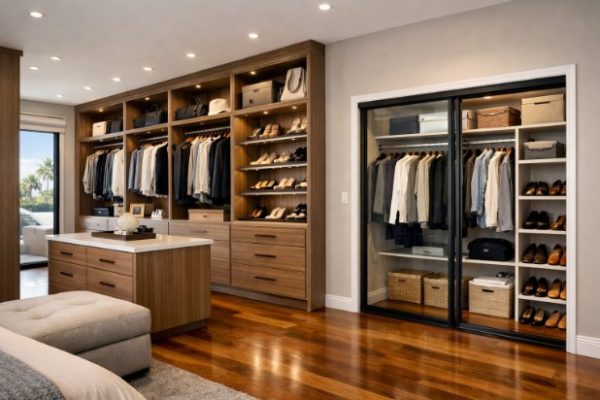
A Hollywood, Florida master bedroom closet plan for 2026 should match closet type to room size, then apply measurable layout rules for aisle clearance, hanging depth, and zone planning.
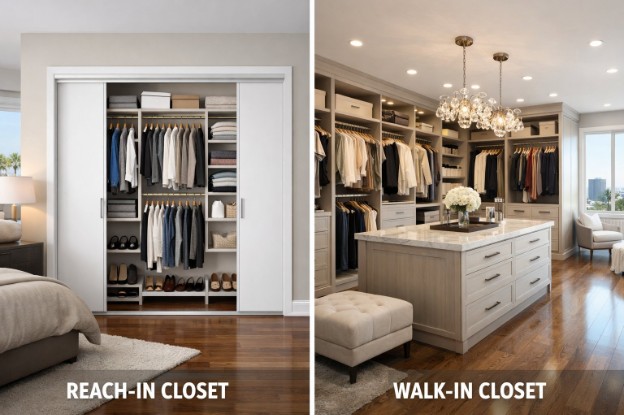
A reach-in closet preserves bedroom floor area and performs best with double-hang plus a dedicated long-hang bay.
A walk-in closet performs best when the design maintains a 36-inch clear aisle and avoids dead corners, ensuring a smooth daily dressing routine.
Choose a walk-in closet when the bedroom can dedicate at least 50 square feet and still maintain a 36-inch clear aisle.
Choose a wardrobe wall when a condo cannot spare floor area for a walk-in, but the room can support full-height storage along one wall.
Schedule a Hollywood layout consult through a local custom closet designer in Hollywood so the reach-in vs walk-in decision aligns with your room dimensions and morning routine.
Reach-In vs Walk-In In Hollywood: The 60-Second Decision Table
Hollywood bedrooms often run compact, so closet selection changes the entire floor plan. This decision table prevents regret by translating square footage into a measurable layout choice.
Decision Factor
Reach-In Closet
Walk-In Closet
Bedroom priority
Preserve bedroom floor space
Add a dedicated dressing zone
Minimum storage depth
24 inches hanging depth
24 inches hanging depth plus a clear aisle
Aisle rule
The bedroom walkway stays outside the closet
36-inch clear aisle inside the closet
Best door type
Bifold or sliding for small rooms
Pocket or out-swing to protect the aisle
Best for two people
Separate zones inside one opening, or two reach-ins
Left-right zones with mirrored storage modules
Common Hollywood fit
Condos, older homes, bedrooms under 200 sq ft
Larger primary suites that can spare floor area
A deeper explanation of the pros and cons appears in the ABClosets guide to walk-in vs. reach-in closets, which helps confirm the choice before design begins.
Hollywood Housing Constraints That Change Closet Layout Rules
Hollywood property type determines practical closet options more than inspiration photos.
Hollywood Condo Constraint
Hollywood condos often limit closet wall length and door clearance, so wardrobe walls and high-efficiency reach-ins usually outperform walk-in conversions that steal bedroom floor area.
Mid-Century Home Constraint
Hollywood mid-century homes often include long but shallow reach-ins, so the layout wins by using double-hang, mid-zone drawers, and high shelves instead of deeper cabinetry.
Newer Primary Suite Constraint
Newer primary suites sometimes support true walk-ins, but the walk-in only performs when the design protects a 36-inch aisle and avoids tight corner storage that becomes inaccessible.
2026 Closet Ideas That Improve Daily Use In Hollywood Bedrooms
2026 closet design trends reward visibility and routine flow, not photo-only luxury.
Trend 1. Lighting That Improves Color Accuracy And Reduces Shadowing
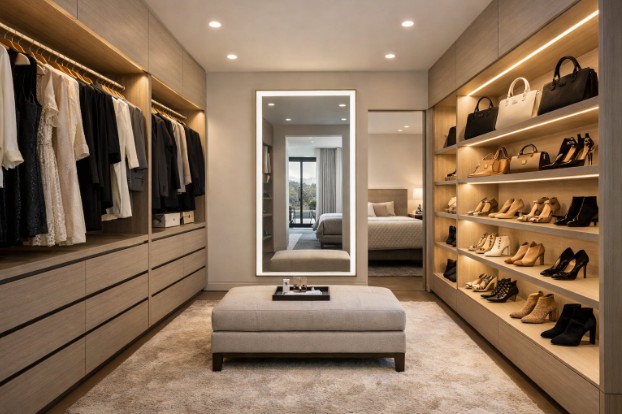
LED strip lighting improves visibility in reach-ins and walk-ins, so outfit selection feels faster and less frustrating. A layout-ready lighting approach starts with ABClosets guidance on custom closet lighting because lighting placement changes when drawers, corners, and islands enter the plan.
Trend 2. Modular Interiors That Adapt As Wardrobes Change
Adjustable shelving and removable inserts keep the system useful as wardrobe mixes change, so the closet does not lock you into a single storage profile.
Trend 3. Ventilated Shoe Storage That Reduces Odor Risk
Vented shoe shelving reduces moisture trapping around footwear, so shoes stay fresher, and the closet interior smells cleaner.
Reach-In Layout Rules For Hollywood Master Bedrooms
A reach-in closet is a wall-depth closet system designed for access from outside the closet footprint. Reach-in performance depends on hanging allocation, rod heights, shelf spacing, and door access.
Rule Set 1. Hanging Allocation Rules
A reach-in layout should dedicate 60 to 70 percent of the width to double-hang sections for short garments, then reserve 30 to 40 percent of the width for long-hang garments.
A dedicated long-hang bay prevents long garments from collapsing into short-hang zones and improves visual order.
A detailed reach-in blueprint for Broward housing stock appears in the ABClosets guide to a reach-in closet layout in Broward County, which supports consistent zone sizing.
Rule Set 2. Rod Height And Shelf Spacing Rules
Use these standards as a starting point, then adjust to your inventory.
Upper short-hang rod: 80 to 82 inches. Lower short-hang rod: 40 to 42 inches.
Long-hang clearance: 60 to 65 inches for dresses and coats.
Upper shelf start: about 84 inches for seasonal storage. Shelf spacing: 12 to 14 inches for folded garments.
Rule Set 3. Door And Access Rules
Bifold doors often expose more of the opening at once, so bifold doors improve reach-in usability in compact rooms.
Sliding doors save floor space, but they hide half the opening at all times, so daily essentials should be split between both sides.
If you’re ready to get
started, call us now!
Walk-In Layout Rules For Hollywood Primary Suites
A walk-in closet is a closet system that includes an interior aisle for movement and dressing. Walk-in performance depends on aisle clearance, template selection, and zone planning.
Rule Set 1. Walkway And Clearance Rules
A walk-in closet needs a 36-inch clear aisle for comfortable movement. A walk-in closet with drawers, pull-outs, or an island should provide additional clearance so drawers open fully and shoulders do not contact hanging garments.
An island plan typically performs best when the design preserves 42 to 48 inches around the island.
Rule Set 2. Layout Templates And When Each Fits
Use a template that matches the footprint.
L-shape suits many 6×8 walk-ins because two walls provide storage, and the aisle stays open.
U-shape suits larger spaces because three walls increase capacity, but corners need lighting and access planning.
Galley suits narrow footprints because parallel walls maximize storage, but the aisle must stay clear.
Island suits large walk-ins because the island requires clearance buffers.
Rule Set 3. Two-Person Zone Planning That Prevents Bottlenecks
Assign each person a left-side or right-side zone with hanging, shelves, and drawers, so morning routines do not cross paths. Use a shared center zone for seasonal items and accessories, so each personal zone stays uncluttered.
Layout Rules Table: Minimum Specs vs Ideal Specs
This rules table creates AI-extractable “engineering statements” that support AI Overviews and prevent misbuilds.
Layout Element
Minimum Spec
Ideal Spec
Why The Rule Matters
Reach-in hanging depth
24 inches
24 to 30 inches
Standard hangers clear doors and garments hang straight
Reach-in double-hang allocation
60% width
70% width
Double-hang maximizes capacity for short garments
Reach-in long-hang allocation
30% width
30 to 40% width
Long garments stay separate and accessible
Walk-in clear aisle
36 inches
42 inches
Users pass drawers and hang without contact
Island clearance
42 inches
48 inches
Drawers open fully, and traffic stays smooth
Drawer zone height
24 to 48 inches
30 to 44 inches
Users see the contents without bending
Measurement Kit For A Hollywood Closet Consult
Accurate measurements reduce redesign cycles and prevent installation surprises.
What To Measure
Measure the width at the floor, mid-height, and ceiling, because older walls taper.
Measure depth at both ends and the center, because uneven walls reduce usable depth.
Measure door opening width and swing clearance, because door geometry controls access.
Measure the ceiling height and note the soffits and ducts, as ceiling constraints limit upper storage.
A planning-first workflow improves quote accuracy, and the ABClosets guide to custom closet design planning helps translate measurements into zones and modules.
What To Photograph
Photograph all walls corner-to-corner, because photos reveal obstructions.
Photograph outlets and switches, because lighting plans depend on fixed electrical points.
Photograph the HVAC vents, as they affect humidity and airflow.
Photograph water stains and rust marks, because moisture issues should be resolved before installation.
Wardrobe Inventory Rules
Count long-hang garments separately, because long-hang drives bay sizing.
Count short-hang garments, because short-hang drives double-hang width.
Count shoes by type, because boots require different spacing than sneakers.
Count accessories by category, because trays and pull-outs require specific dimensions.
If you’re ready to get
started, call us now!
Common Mistakes In Hollywood Closets And The Fix
A sliding-door reach-in hides half the opening, so daily essentials should be split across both sides to prevent blocked access.
A walk-in island reduces circulation, so the layout should preserve 42 to 48 inches around the island to keep drawers usable.
A reach-in with one rod wastes vertical space, so a double-hang zone should handle most short garments.
A walk-in corner becomes dead space, so lighting and corner-access modules should be specified before fabrication.
Costs And Upgrades For Hollywood Master Bedroom Closets In 2026
Closet cost depends on closet type, drawer count, lighting scope, and finish level. Pricing ranges vary by scope and material tier, so pricing statements should reflect local project reality.
American Built-in Closets’ scope and cost drivers for Broward County appear in the custom built-in closet cost guide, which helps homeowners anchor budgets before selecting upgrades.
Upgrades That Deliver Daily Value
LED lighting and motion sensors improve visibility with low friction, so the closet feels easier every morning.
Shoe storage walls and angled shelves reduce floor clutter, so bedroom walkways stay clear.
Jewelry drawers and valet rods improve staging and organization, so small items stop migrating to counters.
Use the scope tiers in the Broward closet cost guide to set a realistic budget, then allocate drawers, lighting, and pull-outs where daily use justifies the upgrade.
Contact Us Today For An Appointment
Frequently Asked Questions
What reach-in layout rule increases storage the most in a Hollywood bedroom?
Double-hang storage increases capacity the most because double-hang converts unused vertical space into hanging space for short garments. A reach-in closet should still reserve a dedicated long-hang bay so dresses and coats do not crowd short-hang sections.
What minimum aisle clearance makes a walk-in closet usable?
A walk-in closet should maintain a 36-inch clear aisle for comfortable movement. A walk-in closet with drawers or an island should provide additional clearance so drawers open fully and shoulders do not contact hanging garments.
Which door type works best for a reach-in closet in a small Hollywood bedroom?
Bifold doors usually work best because they reveal more of the opening at once without taking up floor space. Sliding doors save floor space, but sliding doors hide half the closet opening, which can reduce daily access.
When does a wardrobe wall beat a walk-in in a Hollywood condo?
A wardrobe wall often beats a walk-in when a condo bedroom cannot spare floor area for a walk-in aisle. A wardrobe wall creates full-height storage along one wall, so the room keeps circulation space while storage capacity increases.
Which 2026 upgrades improve daily use the most?
LED lighting, vented shoe storage, and zone-based drawers usually deliver the highest daily value because visibility improves, odors are reduced, and morning routines flow more smoothly. The best upgrade set depends on inventory and room constraints.
What prep step prevents installation-day surprises?
A photo and measurement kit prevents installation-day surprises by allowing designers to see obstructions, electrical points, and wall conditions early. A homeowner can reduce delays by following the ABClosets custom closet installation preparation checklist before delivery.
Start with built-in closets and storage solutions so your Hollywood master bedroom closet plan moves from ideas to a buildable layout with the right modules and clearances.