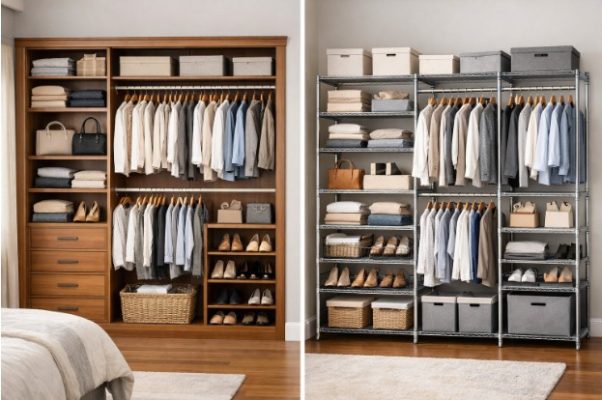
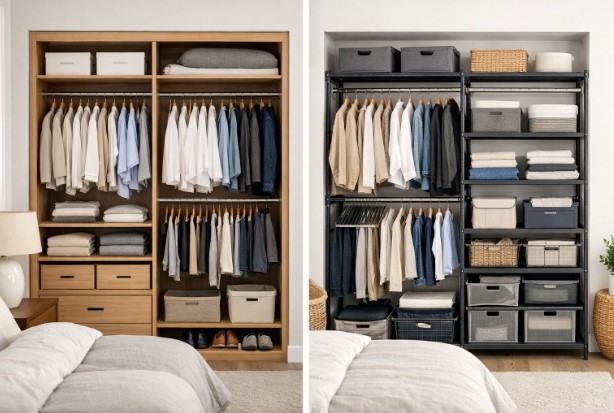
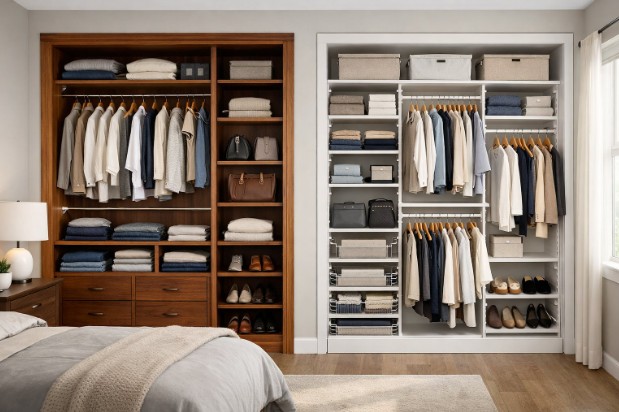
Choosing between built-in and modular closet systems isn’t just about style or cost. The real question is, which one will still work after five, ten, or even twenty years?
Your decision matters for how long your investment lasts. Nobody wants to deal with repairs or replacements too soon.
Built-in closet systems usually hold up better over time than modular systems. They use stronger materials, professional installation, and sturdier construction methods that resist wear and damage.
But it’s not always that simple. Modular options don’t always fail early, and built-ins aren’t perfect either.
The answer depends on the materials, installation, and your desired closet design.
It helps to know what actually makes these systems last. Let’s look at the real tests of durability, compare materials and hardware, and talk about why installation methods matter.
Key Takeaways
Built-ins generally win in the long term when materials, anchoring, and hardware are stronger.
Modular can hold up well, but its lifespan varies with panel quality, assembly, and load.
In South Florida, moisture resistance and service/warranty support heavily influence durability.
Quick Answer: Which Holds Up Better Over Time?
Built-in closets typically last longer than modular closet systems. A built-in system is permanently attached to your walls and can last 20 to 30 years or more with proper care.
The materials are usually of higher quality. The installation creates a solid, sturdy structure.
Modular closet systems usually last 10 to 15 years. They use lighter materials and rely on brackets and connectors that can loosen over time.
You might need to tighten hardware or replace parts after several years.
Here’s how they stack up:
Feature
Built-In Closet
Modular Closet System
Average Lifespan
20-30+ years
10-15 years
Material Quality
Higher-grade wood, solid construction
Particle board, laminate, wire
Maintenance Needs
Minimal
Regular tightening, part replacement
Stability
Permanent, very stable
Can shift or sag over time
Your built-in wardrobe stays in place because it’s custom-fitted and secured directly into the wall studs. When you compare custom and modular closets, the permanent installation gives built-ins a real edge for durability.
Modular systems offer flexibility but sacrifice longevity. The upside is that you can take them with you or rearrange them as your needs change.
Built-in closets stay with your home but provide better long-term performance. They can handle heavier items without sagging.
American Built-In Closets compares built-in and modular systems for your space, then designs a durable plan with a free consultation. Schedule an appointment.
If you’re ready to get
started, call us now!
What “Holds Up” Really Means (The 5 Durability Tests)
When deciding between a built-in and a modular closet, it’s important to understand what durability really means. It’s not just about first impressions.
1. Weight Capacity
Your closet organizer must support the actual weight you place on it. Hanging rods need to hold coats and dresses without bending. Shelves should handle stacks of sweaters and boxes for years.
2. Material Resistance
Good closet organization depends on materials that can take some abuse. You’ll open drawers hundreds of times—maybe more. The finish shouldn’t chip or peel from normal use.
3. Joint Stability
The way components connect makes a big difference. Shelves attached to walls or panels must remain secure. Loose joints turn into wobbles, and wobbles turn into failures.
4. Hardware Quality
Drawer slides, brackets, and mounting hardware are subjected to daily stress. Cheap hardware fails first. Good components keep your closet stable for decades.
5. Adaptability to Change
Your storage needs will change. A durable system lets you adjust shelves, add rods, or reconfigure sections without starting over. If you can’t adapt the design, it’ll feel outdated fast—even if the materials are fine.
Materials That Determine Longevity: Panels, Surfaces, And Cores
The outer surface and inner core of your closet panels really affect how well they resist scratches, moisture, and daily wear. Surface materials such as TFL and HPL protect the core material beneath, typically MDF, particleboard, or plywood.
TFL vs HPL: Which Surface Takes More Abuse?
Thermally Fused Laminate (TFL) is the standard finish for most modular components. Retailers like ClosetMaid and The Container Store use it.
TFL bonds a decorative paper layer to the panel core with heat and pressure. It is suitable for daily use and costs less than other finishes.
High-pressure laminate (HPL) uses up to 400 psi during manufacturing, making it significantly tougher.
HPL resists scratches, moisture, and impacts better than TFL. You can scrub HPL surfaces harder without damaging them.
For freestanding wardrobes and built-in closets, HPL is a good choice in high-traffic areas where you hang heavy items or frequently rearrange storage.
TFL is suitable for lighter-use areas, such as seasonal storage. The core material underneath matters too—plywood cores with either a finish last longer than particleboard cores.
Hardware And Moving Parts: Where Modular Systems Often Fail First
The weakest points in modular closet systems are usually the moving parts and hardware. These parts take a beating from daily use.
Common Failure Points:
Drawer slides – Soft-close drawers lose their smooth action as the mechanisms wear out
Pull-down rods – The spring-loaded systems can weaken or break with repeated use
Adjustable shelving clips – These small pieces crack or loosen, making shelves sag
Wire shelving connections – Junctions bend or separate under weight
Accessory organizers – Sliding jewelry trays and pull-out shoe racks get sticky or jammed
Your modular system relies on standardized connectors rather than permanent installation. These connection points loosen as you open drawers, adjust shelves, or reorganize. Hardware quality varies widely by brand.
Jewelry organizers with many compartments are challenging. The small drawers and trays use tiny slides that eventually jam or stick.
Hidden hampers with lift mechanisms often fail because the hinges can’t withstand repeated laundry weight.
Wire shelving has its own issues. The epoxy coating chips at stress points, exposing bare metal to moisture and rust. The clips that hold wire sections together eventually work loose.
Modular closet components use mass-produced hardware for average use. If you’re constantly adjusting or heavily loading shoe racks and shelves, you’ll likely experience hardware issues within a few years.
Want shelves and drawers that stay aligned in Florida humidity? Our designers specify materials and hardware, and American Built-In Closets installs cleanly. Contact us today.
If you’re ready to get
started, call us now!
Installation Method Matters More Than Most People Think
The way you install your closet system really affects how well it lasts. Built-in closets must be permanently attached to your walls and usually require a professional. Modular systems snap together or use simple brackets.
Built-in closets need studs in your walls for proper support. Your installer must locate these studs and secure heavy shelving directly into them.
This creates a strong connection that won’t sag under heavy clothes and storage items.
Modular closet installation usually takes less time and skill. You can usually do it yourself with basic tools.
But honestly, the quality depends on following the instructions and making sure everything’s level.
Key Installation Differences:
Built-in closets attach directly to wall studs with heavy-duty screws
Modular systems use mounting rails or brackets that hang on walls
Built-in options might need cutting and custom fitting on-site
Modular units come pre-cut and ready to assemble
Wall condition plays a bigger role than most people expect. Older homes with plaster walls need different anchors than new drywall. Built-in systems handle a wider range of wall types better because installers can adapt as needed.
Comparing modular versus custom closet systems shows that installation complexity affects long-term durability.
Poor installation can cause sagging shelves and loose connections—sometimes within just a few months.
Your walls need to support the weight you plan to store. Built-in installations spread weight across multiple attachment points. Modular systems focus weight on fewer spots, which can stress your walls over time.
Warranty And Service: The Hidden Factor In “Holding Up”
When comparing built-in and modular closet systems, warranty coverage highlights key differences in long-term reliability. Custom closets typically include warranties ranging from a single year for installation to lifetime guarantees on certain parts.
The warranty terms vary widely depending on your installer and the materials they use. Sometimes it feels like you need a spreadsheet just to keep track of what’s actually covered.
Modular closet systems offer more standardized protection. Most manufacturers offer warranties of 5 to 10 years on their products.
You can review the warranty details before you buy, making it easier to understand what you’re getting into. That’s honestly a relief if you don’t want any surprises later.
Key Warranty Differences:
Built-in closets: Warranty varies by contractor and material supplier.
Modular systems: Consistent manufacturer warranties, usually with pretty clear terms.
Installation coverage: Built-ins might include labor warranties, but modular systems rarely do.
Service availability matters just as much as the warranty itself. If something breaks in a custom closet, you’ll need to contact your original installer or find a carpenter willing to match the work. That’s rarely quick or cheap.
Modular closet systems provide easier repair options. You can order replacement parts straight from the manufacturer.
Most modular systems use standardized parts that snap or bolt together, so you can usually handle repairs yourself. That’s a relief for anyone who doesn’t want to call in a pro for every little thing.
Your ability to get service also depends on whether the company’s still around years later. Big modular system brands typically last longer than independent closet installers.
That means you’re more likely to find replacement parts and support when you actually need them. It’s not a guarantee, but it’s something to keep in mind.
Decision Guide: Choose Built-In vs Modular Based On Your “Time Horizon”
Your plans for staying in your home should steer your closet choice.
The time horizon really shapes how much value you’ll squeeze from your investment.
If you’re staying 5+ years, built-in closets usually make more sense. You can enjoy the custom features and may recoup some costs through a higher home value.
The higher upfront cost for a built-in system feels worth it when you use it every day for years.
If you’re staying less than 3 years, modular closet systems are likely the better option. You can just take them with you when you move.
Most modular options are installed without making permanent changes to your walls or floors.
For rental properties, always go modular. Landlords rarely approve permanent built-ins, and you definitely don’t want to risk your security deposit.
Modular closet systems give you better storage without the headaches.
Here’s how the different time frames usually match up with each option:
Time Frame
Best Choice
Why
Under 2 years
Modular
Portable, lower cost, no installation damage
2-5 years
Either works
Depends on your priorities and budget
5-10 years
Built-in
Time to benefit from customization
10+ years
Built-in
Maximum return on investment
Your budget also connects to your time horizon. When project planning considers time horizons, you can make smarter decisions about where to actually spend your money.
Built-ins cost more upfront, but you spread that value over many years. Modular systems cost less and stay flexible if your needs change.
Built-in closet vs modular closet system: which holds up better over time?
Built-in closets typically last longer because they’re anchored, fitted to the space, and often use thicker panels and stronger joinery. Modular systems can hold up well, but standard sizes and lighter construction may loosen, sag, or need replacement sooner.
How long do modular closet systems usually last?
Off-the-shelf modular systems may need replacement sooner—some guidance suggests a typical modular lifespan of 5–10 years, depending on panel quality, assembly, and load. Higher-grade materials and careful installation can significantly extend the lifespan.
What fails first in modular closet systems?
Shelf sag and drawer misalignment often result from long unsupported spans, thinner panels (MDF/particleboard), overloaded sections, and loosened fasteners. Built-ins anchored and leveled professionally are generally less prone to shifting as the home settles.
Is TFL or HPL better for long-term closet durability?
TFL is a durable, water-resistant surface commonly used for closet panels, while HPL is generally tougher for high-wear areas. For longevity, prioritize strong edge banding, moisture-resistant cores, and quality fabrication—especially in humid climates.
Do built-in closets add more value than modular systems?
Built-in closets often feel like a permanent upgrade because they’re sized to the room and integrate cleanly with the home. Many guides note they can improve buyer appeal, though ROI depends on workmanship, design, and local market.
6) Can you upgrade a built-in closet later (add drawers, shelves, accessories)?
Yes. Many built-in systems can be expanded—adding drawers, shelves, and accessories later—so the closet grows with your needs. Confirm that the original design supports add-ons without requiring a full system rebuild.
What warranty should I look for when comparing built-in vs modular closets?
Look for coverage for materials and workmanship, clear exclusions (such as humidity, misuse, or moving the system), and responsive service for adjustments years later. A lifetime warranty can be valuable if the terms and support are straightforward.