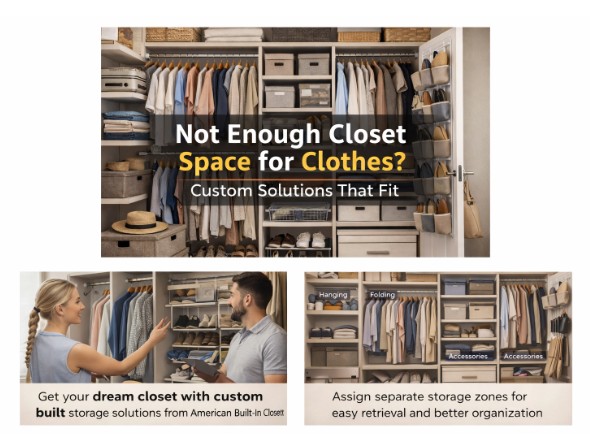
American Built-In Closets designs and installs custom closet systems for walk-in closets and reach-in closets so South Florida homeowners can store more clothing in less space and retrieve outfits faster.
A custom closet system is a built-in storage layout that combines hanging zones, adjustable shelving, drawers, and shoe storage based on a household’s wardrobe inventory.
A custom closet system replaces “one rod and one shelf” layouts with purpose-built zones for shirts, dresses, denim, accessories, and shoes. So you can keep clothing visible, organized by category, and easy to maintain.
Key Takeaways
Closet overflow usually reflects a mismatch between wardrobe size and builder-grade storage layouts.
Custom closet systems improve daily retrieval by separating hanging, folded, and shoe storage, as well as accessories, into defined zones.
A retrieval-first closet layout reduces clutter migration into bedrooms and living spaces.
Count accessories: belts, handbags, hats, jewelry, and storage needs.
A measured layout prevents common design failures, including short-hang congestion, wasted vertical space, and shelves that block hanging access. So you can add storage capacity without adding clutter.
Conservation storage guidance also emphasizes leaving sufficient spacing for access and proper air circulation—an important principle for avoiding overcrowded shelves and hang zones. UNESCO Archives
If you’re ready to get
started, call us now!
Build the Layout: Assign Zones for Hanging, Folding, Shoes, and Accessories
A functional closet layout uses storage zones that match item types and retrieval frequency.
Place daily-wear zones at eye level and reserve top shelves for backstock.
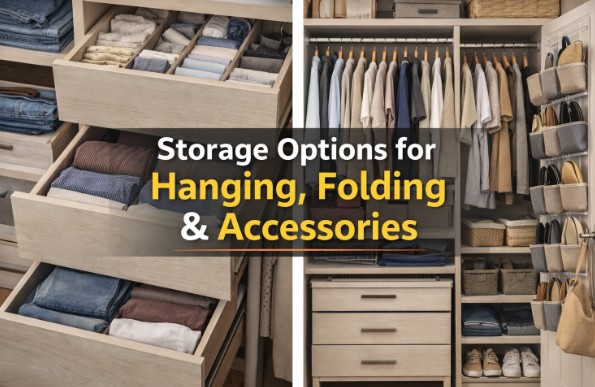
Use zone-based components to increase usable storage:
Double-hang rods for shirts and pants in reach-in closets.
Long-hang sections for dresses and coats.
Adjustable shelving for folded clothing and bins.
Drawer stacks for undergarments, tees, and accessories.
Shoe shelves or cubbies for pairs that usually clutter the floor.
A zone-based layout reduces decision fatigue during dressing and prevents floor piles. So you can locate clothing faster and maintain organization with a quick daily reset.
If you’re ready to get
started, call us now!
Detail Design: Optimize Hardware, Spacing, and Access
A closet design succeeds when the spacing supports the real dimensions of the garments.
Allocate hanging heights for short-hang and long-hang clothing, and size shelves for folded stacks that do not tip or slump.
American Built-In Closets designs closet interiors around the household’s inventory and the closet’s dimensions.
American Built-In Closets also recommends storage accessories, including pull-out hampers, valet rods, tie racks, and jewelry drawers, when the accessory category requires dedicated containment.
So you can protect clothing, reduce wrinkling, and keep small items from disappearing.
Closet Design Inspiration: Walk-In Closet Projects and Layout Examples
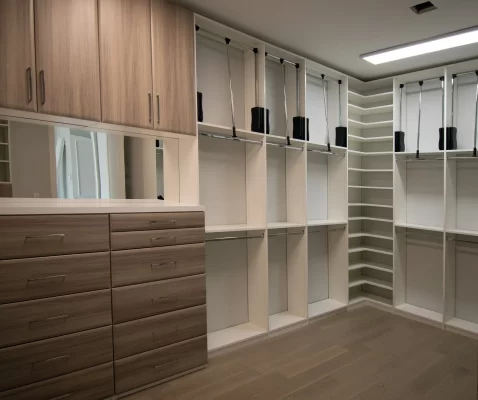
Walk-in closet design examples help homeowners compare layout types, including U-, L-, and straight-run layouts.
A walk-in closet design gallery clarifies how drawers, shelves, and shoe storage work together in real rooms. So you can choose a layout that fits the closet footprint and daily routine.
The best closet organizing system matches the closet dimensions and the wardrobe inventory. A zone-based system combines hanging sections, adjustable shelves, drawers, and shoe storage based on item types and daily use, so clothing stays visible and easy to maintain.
How many rods should a walk-in closet have?
A walk-in closet typically has at least two hanging zones: a short-hang zone for shirts and pants, and a long-hang zone for dresses and coats. The exact rod count depends on the wardrobe mix and the available wall length.
Should different clothing types be stored in separate sections?
Separate clothing types by function to improve retrieval and prevent clutter. Store shirts together, pants together, dresses together, and outerwear together, then group within each section by frequency of use or color, so daily dressing stays fast.
What is the most efficient way to arrange clothes in a walk-in closet?
The most efficient walk-in closet layout places daily wear at eye level, folded items in drawers or on accessible shelves, and occasional items on higher shelves. A zone-first layout reduces searching and keeps floors clear during outfit changes.
Is there research on how people store folded clothing?
Published surveys and consumer research often show drawers and shelves as the most common storage for folded clothing because drawers reduce visual clutter and shelves provide fast access. American Built-In Closets can recommend drawer-to-shelf ratios based on wardrobe inventory.
Is it better to fold clothes on shelves or store clothes in drawers?
Drawers reduce visual clutter and protect folded clothing from dust, while shelves improve visibility for frequently used items. Use drawers for small basics and accessories, and use shelves for sweaters or bins, so the closet stays tidy and easy to maintain.
How much space do you need between hangers to avoid crowding?
Leave enough space for hangers to slide easily without compressing fabric. Overcrowded hang zones cause wrinkling and reduce airflow, so spacing hangers slightly apart improves garment care and speeds outfit retrieval.