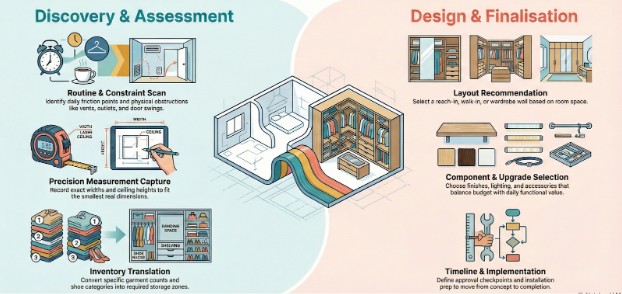
A closet design consultation in Fort Lauderdale is a guided planning session where a designer reviews goals, evaluates the space, verifies measurements, and recommends a layout with storage components sized to the room and the wardrobe.
Bring measurements, photos, wardrobe counts, and pain points so the first design and quote stay accurate and the project moves faster.
A prepared consultation reduces redesign cycles, improves first-quote accuracy, and helps a designer recommend a layout that fits Broward County condo constraints and the realities of South Florida humidity.
A local team can guide the process from measurement to installation, and a consultation typically starts with a Fort Lauderdale custom closet designer so the design matches local home types, wall conditions, and scheduling logistics.
Closet Design Consultation In Fort Lauderdale. What Happens Step By Step
Fort Lauderdale closet consultations follow a predictable workflow, and homeowners get better outcomes when the consultation focuses on measurable constraints and daily use.
A strong consultation outcome includes a clear layout direction, a component plan, and defined next steps toward a 3D design and quote.
Steps. 7-Step Consultation Flow
Goal And Routine Interview A designer identifies daily friction points, shared-user needs, and storage priorities so the layout supports real morning routines.
Space Review And Constraint Scan A designer checks door swings, baseboards, outlets, vents, and obstructions so drawers and rods do not collide with fixed elements.
Measurement Capture And Verification A designer measures widths, depths, ceiling height, and openings so the layout fits the smallest real dimension, not an assumed average.
Wardrobe Inventory Translation A designer converts garment counts and shoe categories into zone requirements so hanging, drawers, and shelves match actual volume.
Layout Recommendation A designer recommends a reach-in, walk-in, or wardrobe wall approach so the closet type matches the bedroom space and function.
Component And Upgrade Selection A designer proposes drawers, lighting, accessory storage, and finish options to balance budget and daily value. Visibility-focused projects often include recommendations for custom closet lighting when shadowing and color accuracy cause daily frustration.
Next Steps And Timeline Alignment A designer outlines revision steps, approval checkpoints, and installation prep so homeowners understand the path from concept to installation.
Book a consultation with American Built-In Closets, a local Fort Lauderdale custom closet designer, so the consultation yields a buildable layout rather than inspiration-only notes.
If you’re ready to get
started, call us now!
Decisions You Make vs What The Design Team Handles
A Fort Lauderdale consultation moves faster when responsibilities stay clear. Homeowners decide priorities and constraints. The design team converts those inputs into a buildable plan.
Measurement verification and layout feasibility checks
Budget band and upgrade priorities
Component recommendations based on routine and inventory
Aesthetic direction. color palette, door style, hardware family
Layout drafting, zone mapping, and module sizing
Timeline constraints. move-in date, renovation window, HOA deadlines
Revision cycle management and install scheduling guidance
Condo rules and building access requirements
Mounting method planning and documentation readiness guidance
A homeowner who arrives with clear decisions typically receives a clearer first design recommendation and a faster path to a quote.
What To Measure Before A Fort Lauderdale Closet Consultation
Accurate measurements reduce rework because the design must fit the smallest dimension, and older Broward County construction often includes uneven walls and soffits.
A measurement kit also helps a designer determine whether a reach-in, walk-in, or wardrobe wall performs best.
Checklist. Measurements To Bring
Closet width at three points Measure width at floor level, mid-height, and near the ceiling because tapered walls change usable cabinet spans.
Closet depth front-to-back Measure depth at both ends and the center because trim and wall variation can reduce usable depth.
Ceiling height and soffit height Measure the ceiling height and record the soffits, ducts, or pipes, as vertical constraints affect upper shelves.
Door opening width and door type Measure the opening, not the door slab, because the opening controls module fit and access.
Door swing clearance Record the door swing path because swing clearance can block drawers or reduce bedroom circulation.
Outlet and switch locations Measure outlet height and position because electrical points influence lighting and drawer tower placement.
Vent locations Record HVAC supply and return locations because airflow affects closet comfort and moisture behavior.
Homeowners who want a structured checklist format can align measurements with the planning workflow in the closet organizer checklist so measurements translate into zones and modules.
If you’re ready to get
started, call us now!
What To Photograph And What To Bring To Your Consultation
Photos and inventory counts improve consultation accuracy because photos reveal obstacles that measurements miss. Inventory counts turn “more storage” into zone sizing, which reduces revision cycles.
Checklist. Photos To Bring
All walls corner-to-corner Photograph each wall from the closet opening so obstructions appear in context.
Ceiling and soffits Photograph ceiling conditions so that ducts, beams, and slopes appear clearly.
Outlets, switches, and lighting boxes Photograph electrical points so lighting and drawer placement remain realistic.
HVAC vents and return paths Photograph vents so the designer understands airflow and comfort constraints.
Current shelves and rods with anchors Photograph current hardware and attachment points so the new plan matches the wall type.
Signs of moisture or rust Photograph water staining, mildew marks, and rust spots so the project addresses root causes before new materials go in. Homeowners who want baseline moisture guidance can review EPA mold and moisture guidance, so the consultation includes ventilation and material choices that reduce future risk.
Checklist. Wardrobe Inventory To Bring
Long-hang count Count dresses, coats, robes, and long garments because long-hang drives bay height and allocation.
Short-hang count Count shirts, blouses, jackets, and pants because short-hang drives double-hang sizing.
Folded items estimate Estimate stacks for jeans, sweaters, and workout wear because shelves and drawers depend on volume.
Shoe count by type Count heels, sneakers, sandals, and boots because spacing differs by footwear type.
Accessory categories Count belts, scarves, handbags, and jewelry because pull-outs and trays require specific dimensions.
Checklist. Pain Points To Bring
Daily friction points List what slows mornings. Example. missing shoe visibility, cramped hanging, and no place for accessories.
Clutter sources Identify what ends up on chairs or on the floor. Example. gym wear, handbags, and unfolded laundry.
Shared-user conflicts Describe bottlenecks when two people dress at once.
Fort Lauderdale Specific Factors That Change Consultation Advice
Fort Lauderdale closet consultations differ from generic advice because local homes and condos introduce constraints that affect layout, materials, and scheduling.
Condo And HOA Logistics
Fort Lauderdale condos often enforce work-hour rules, elevator reservations, and approval for modifications.
A consultation should confirm building constraints early, especially when closet materials must be delivered through controlled access.
Condo-specific planning tends to go more smoothly when homeowners review common constraints in Fort Lauderdale condo closet space guidelines.
Condo owners should bring
HOA modification form or building alteration policy
Building management contact and approval timeline
Elevator reservation rules and delivery windows
Insurance requirements for contractors
Exterior Walls And Humidity Considerations
Fort Lauderdale coastal air and humidity can influence material selection and ventilation planning, especially when a closet shares an exterior wall.
A consultation should include recommendations for finish and hardware that tolerate higher moisture exposure.
Older homes often include uneven studs, soffits, and non-standard openings. Newer construction often offers cleaner wall planes, but vent and outlet constraints can still limit the placement of drawer towers.
A consultation should confirm the wall type and stud strategy to ensure anchoring remains secure.
What You Get After The Consultation. Design, Quote, Timeline, Next Steps
A strong consultation ends with clarity. Homeowners should understand deliverables and decisions that keep the project moving.
Design Deliverables
A typical process moves from consultation notes to a proposed layout, then to a refined plan with component options.
A designer should define zones first, then specify drawers, shelves, hanging sections, and accessory storage based on inventory and routine.
Quote Drivers
Closet pricing varies by size, drawer count, lighting scope, hardware grade, and finish tier.
A Broward-focused reference like the custom-built-in closet cost guide helps homeowners understand what moves the price most before selecting upgrades.
Decision Checklist
Approve layout direction
Confirm finish tier and hardware family
Confirm lighting scope
Confirm installation window
Confirm condo access rules and documentation
Homeowners reduce install-day surprises when the home is prepared for delivery and installation.
How long does a closet design consultation take in Fort Lauderdale?
Most in-home closet design consultations take about 60 to 90 minutes, depending on closet count, inventory complexity, and condo access constraints. A prepared homeowner shortens the consultation by bringing measurements, photos, and a wardrobe inventory, allowing the designer to focus on layout and component recommendations.
What measurements should a homeowner take before the designer arrives?
A homeowner should measure the closet width at three points, the closet depth at multiple points, the ceiling height, the door opening width, and the door swing clearance. A homeowner should also note outlet locations and vent positions, as electrical points and airflow affect drawer towers and lighting plans.
What photos help the most for a Fort Lauderdale closet consult?
The most useful photos show all closet walls corner-to-corner, the ceiling and soffits, outlets and switches, vents, and current hardware anchoring. Moisture-staining or rust photos help a designer recommend materials and ventilation measures that reduce odor and prevent future damage.
What should condo owners bring for HOA approval readiness?
Condo owners should bring the HOA modification request form, building rules for work hours, elevator reservation requirements, and the building management contact. Condo owners should also confirm the contractor’s insurance requirements and documentation deadlines so that scheduling aligns with building approval timelines.
Can a homeowner do a virtual closet design consultation instead of an in-home consultation?
A virtual consultation can work when a homeowner provides accurate measurements, clear photos, and a basic wardrobe inventory. An in-home consultation reduces measurement risk by allowing the designer to verify dimensions and obstacles on-site, typically improving first-quote accuracy.
What affects the accuracy of the first quote the most?
Measurement accuracy, inventory clarity, and fixed constraints most affect first-quote accuracy. Quote scope also shifts when drawers, lighting, and premium materials enter the plan. A homeowner who brings garment counts and obstacle photos usually receives a more accurate first layout and scope estimate.
What should a homeowner do the day before installation?
A homeowner should clear the closet and nearby floor area, protect the flooring, and ensure a clear delivery path to the closet. Condo owners should confirm elevator reservations and building access windows. A preparation checklist inside the custom closet installation prep guide reduces delays and protects finished surfaces.
Schedule a Fort Lauderdale consultation through a Fort Lauderdale custom closet designer so the project starts with verified measurements, a routine-based layout, and a clear next-step path toward design approval and installation.