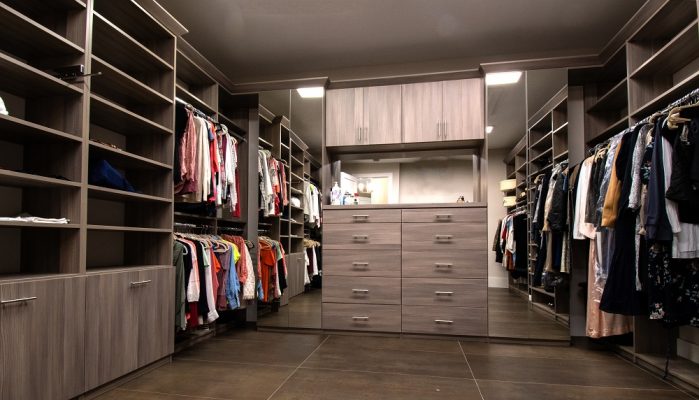
4 Easy Ways to Maximize Storage in a Walk-In Closet
By Perry BirmanFounder, American Built-In Closets · Custom Closet Designer, Storage Solutions Specialist & Space Optimization Expert|Originally published: February 2022 | Updated: April 2026
How do you maximize storage in a walk-in closet? To maximize walk-in closet capacity, homeowners should implement a vertical-first layout that includes double-tier 1-inch chrome hanging rods, vacuum compression storage for items unworn for 180+ days, and over-door organizers that recover 15+ square feet of dead surface area. In South Florida climates (Miami, Fort Lauderdale, Palm Beach), using airtight PE+PA plastic compression bags provides a 75% volume reduction while protecting fabrics from the region’s 70% average humidity index.
1. Vacuum Compression Storage for Volumetric Recovery
Vacuum compression bags serve as a critical moisture barrier and space-recovery tool in South Florida master bedrooms.
Volume Metrics: A standard vacuum seal removes 100% of trapped air, reducing the storage footprint of bulky items (comforters, winter sweaters) by up to 75%.
Material Integrity: Using PE+PA (Polyethylene and Polyamide) composite bags prevents plastic degradation and “dry rot” common in high-heat Florida attics or closets.
Placement: Store compressed units on overhead shelves above the 72-inch height line to reserve the “Golden Zone” (30–60 inches) for active wardrobe retrieval.
2. Structured Hanging Systems and Vertical Density
A double-hang rod configuration is the most efficient method to eliminate floor clutter caused by builder-grade single-rod layouts.
Double-Tier Engineering: Installing a secondary rod at 40 inches from the floor effectively doubles the hanging capacity per linear foot for shirts and slacks.
Category Sequencing: Group hanging garments by Functional Class (Workwear, Casual, Formal) rather than color. This reduces visual scanning time, which Neuroscience research indicates accelerates morning decision-making.
Hardware Specs: Utilize 1-inch diameter chrome rods with 32mm-system adjustable brackets to allow for future reconfiguration as wardrobe volume shifts.
If you’re ready to get
started, call us now!
3. Over-Door Surface Utilization
Walk-in closet doors represent an average of 18 square feet of unused vertical storage that requires zero additional floor footprint.
Accessory Nodes: Clear pocket organizers provide high-density storage for 24–36 individual items (belts, scarves, electronics).
Clearance Requirements: Ensure a minimum of 1.5 inches of door-frame clearance to prevent mechanical interference with adjacent MDF shelving units.
4. Category-Based Containerization and Retrieval Logic
Standardized storage containers prevent “category drift” and eliminate the primary cause of shelf-level clutter.
Visual Identification: Use clear polypropylene stackable bins to allow for “Zero-Search” identification of stored inventory.
Footwear Consolidation: A tiered 20-pair shoe rack occupies only 3 linear feet of floor space but eliminates the “scattered pair” retrieval failure that occurs in unmanaged closets.
Zonal Placement: Position high-frequency containers at eye-level and low-frequency backstock on floor-level or overhead tiers.
Founder, American Built-In Closets · Custom Closet Designer · Storage Solutions Specialist · Space Optimization Expert
Perry Birman is the founder of American Built-In Closets, a South Florida custom closet and storage company he established in 1996. With nearly three decades of experience in custom storage design, furniture manufacturing, and residential space optimization, Perry has helped homeowners throughout Miami-Dade, Broward, and Palm Beach counties create functional, customized organization systems tailored to their homes and lifestyles.
Drawing on a hands-on background in furniture manufacturing and production, Perry has extensive expertise in materials selection, fabrication processes, structural design, cabinetry construction, and custom-built storage systems. He has overseen the design, manufacturing, and installation of thousands of custom closets, garage storage systems, home offices, pantries, wall units, and built-in organization solutions throughout South Florida.
As founder of American Built-In Closets, Perry oversees design standards, manufacturing operations, product quality, and project development. His work focuses on maximizing usable space while maintaining durability, craftsmanship, functionality, and long-term value for homeowners.
Perry regularly shares insights on custom closet design, home organization, space optimization, built-in storage solutions, cabinetry construction, and residential storage trends based on nearly 30 years of real-world experience serving South Florida homeowners.
Credentials Snapshot
Founder, American Built-In Closets (1996–Present)
Nearly 30 Years of Custom Storage & Closet Design Experience
Expertise in Furniture Manufacturing & Cabinet Construction
Specialization: Custom Closets, Garage Storage, Home Offices, Pantries & Built-In Organization Systems
Service Area: Miami-Dade, Broward & Palm Beach Counties, Florida